
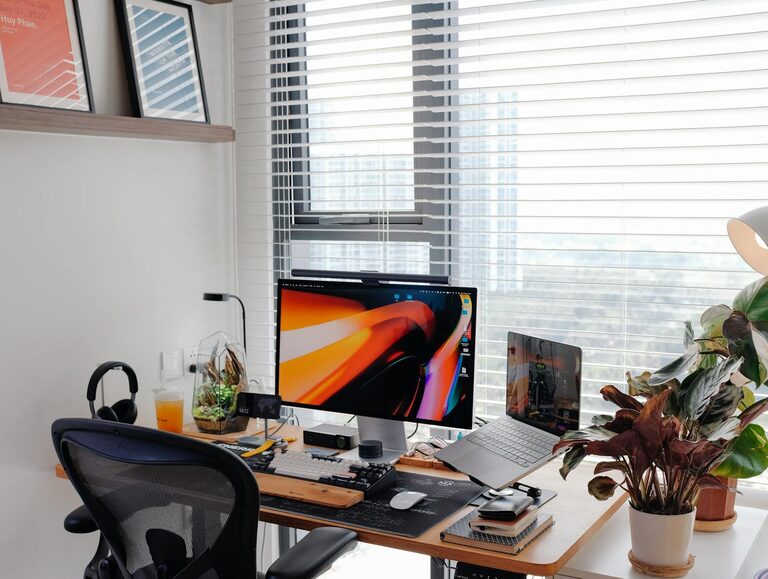
Creating a productive home office environment is essential for anyone working from home, whether full-time or occasionally. A well-designed workspace can help you stay focused, reduce distractions, and maintain a healthy work-life balance. In this post, we will explore practical tips to help you set up an efficient and comfortable home office that supports your daily tasks.
1. Choose the Right Space
Find a Dedicated Area
Selecting a dedicated space for your home office is crucial. Ideally, choose a quiet spot away from high-traffic areas to minimize distractions. A separate room is best, but if that’s not possible, consider using a corner or partition to define your workspace.
Consider Natural Light
Natural light can improve mood and productivity. Position your desk near a window if possible, but avoid glare on your computer screen. When natural light is limited, use good-quality artificial lighting to reduce eye strain.
2. Invest in Ergonomic Furniture
Choose a Comfortable Chair
Spend time choosing an ergonomic chair that supports your posture. Look for adjustable features such as seat height, lumbar support, and armrests to reduce discomfort during long work hours.
Opt for a Suitable Desk
Your desk should be large enough to accommodate necessary equipment without feeling cluttered. Standing desks or adjustable desks are also great options to alternate between sitting and standing throughout the day.
3. Organize Your Workspace
Declutter Regularly
A clean and organized workspace promotes focus. Keep only essential items on your desk and store paperwork and supplies in designated storage units like drawers or shelves.
Use Organizational Tools
Desk organizers, filing systems, and cable management solutions can help maintain order. Labeling files and containers makes it easier to find things quickly.
4. Set Up the Right Equipment
Prioritize Technology Needs
Make sure you have reliable internet, a comfortable keyboard and mouse, and a monitor positioned at eye level. Using dual monitors can enhance productivity for many tasks.
Add Useful Accessories
Consider accessories like noise-canceling headphones, a desk lamp with adjustable brightness, and a whiteboard or corkboard for notes and reminders.
5. Control Noise and Minimize Distractions
Use Soundproofing Techniques
If noise is an issue, use rugs, curtains, or sound-absorbing panels to reduce echoes. White noise machines or apps can mask distracting sounds.
Set Clear Boundaries
Communicate your work hours with family or housemates. Use signals, such as a closed door or a “do not disturb” sign, to indicate when you need uninterrupted focus.
6. Personalize Your Space
Add Motivating Elements
Decorate your office with items that inspire you, like artwork, plants, or vision boards. Personal touches can make your space pleasant without causing distractions.
Incorporate Greenery
Plants improve air quality and create a calming atmosphere. Small, low-maintenance plants like succulents or pothos work well in most home offices.
7. Establish a Routine
Set Regular Work Hours
Having defined work hours helps maintain a routine and separates work time from relaxation. Use alarms or calendar reminders to keep your schedule on track.
Take Scheduled Breaks
Short breaks help prevent burnout and improve focus. Try the Pomodoro technique—25 minutes of focused work followed by a 5-minute break—to stay productive throughout the day.
8. Optimize for Health and Wellness
Maintain Good Posture
Practice posture-friendly habits like sitting with feet flat on the floor and keeping your back straight. Adjust your screen to eye level to avoid neck strain.
Stay Hydrated and Move Often
Keep water nearby and take time to stretch or walk around during breaks. Regular movement reduces stiffness and boosts energy.
—
Setting up a productive home office requires thoughtful planning and regular adjustments. By choosing the right space, investing in ergonomic furniture, organizing efficiently, and maintaining good habits, you can create an environment that supports your best work. Remember, your home office should not only be functional but also comfortable and inspiring. With these tips, you can turn any space into a home office that helps you achieve your goals.